
Desert Modern Art for Warm, Calm Interiors
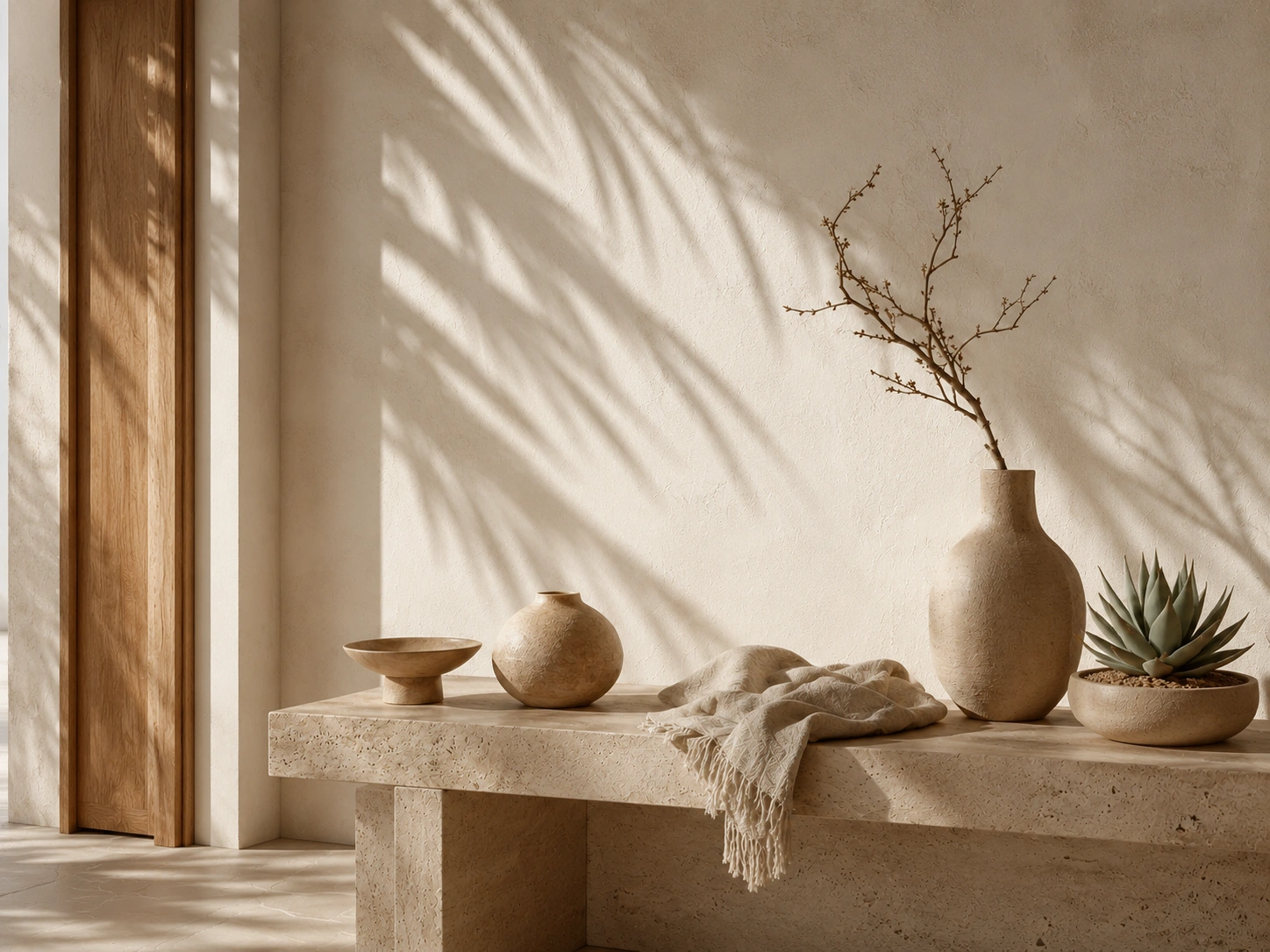
Desert modern art is not about filling a room with cacti, cowboy motifs, or every warm color at once. The style works when it feels open, sun-washed, and considered. Think plaster-like neutrals, natural oak, linen, stone, clay, sculptural shapes, and one or two pieces that give the room a clear point of view.
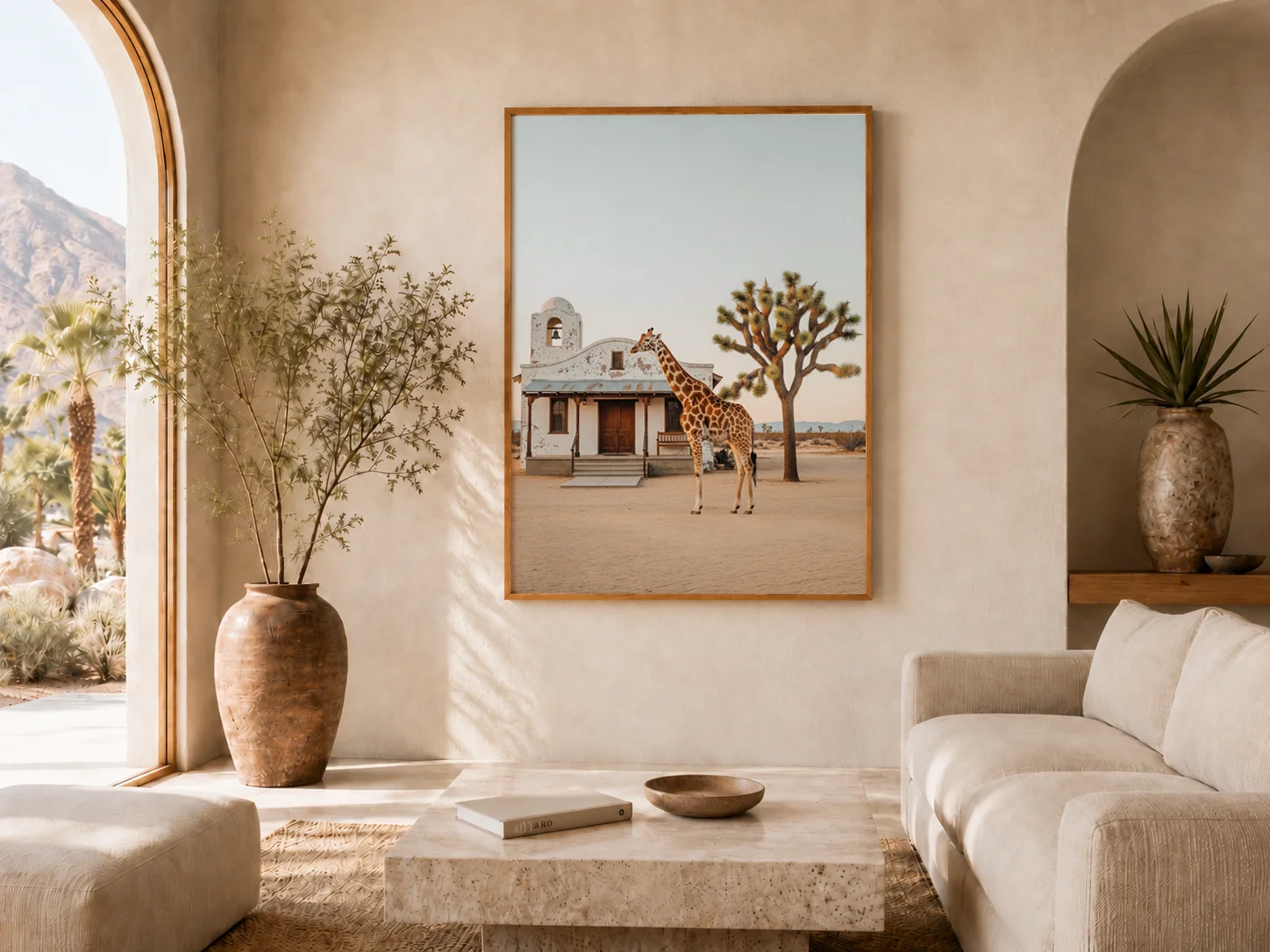
Wall art matters in this kind of interior because the room itself is usually edited. There is often more breathing room between objects, fewer decorative layers, and a stronger focus on material, scale, and light. The right artwork can bring warmth, depth, and personality to that calm setting. The wrong one can make the room feel too literal, too busy, or disconnected from the rest of the space.
This guide explains how to choose desert modern wall art by color, subject, scale, room, and mood. It also shows how desert modern differs from more themed Southwestern decor, how to avoid common styling mistakes, and which kinds of art work best in living rooms, bedrooms, entryways, and offices.
What is desert modern art?
Desert modern art takes its visual cues from dry landscapes, strong sunlight, California architecture, and natural materials. It can include open horizons, palms, desert plants, animals, retro roadside scenes, warm architecture, or abstract forms. What makes it feel desert modern is not the subject alone. It is the balance of space, color, texture, and structure.
A good desert modern piece usually has at least one of these qualities:
- Open composition: enough negative space for the artwork to feel calm on a wall.
- Warm, restrained color: sand, clay, oat, faded pink, olive, rust, pale blue, turquoise, or a focused pop of yellow or red.
- Architectural clarity: clean lines, pool geometry, facades, signage, or sculptural forms that give the scene structure.
- Natural character: a landscape, animal, sky, or material detail that prevents the room from feeling overly polished.
- A clear focal point: one image that feels intentional from across the room instead of a collection of competing details.
Desert modern is often confused with Southwestern decor, but the two are not the same. Southwestern rooms can use more pattern, stronger regional motifs, carved wood, woven textiles, and decorative color. Desert modern is usually more pared back. It leans toward spaciousness, softer layers, architecture, and a more contemporary use of desert references. You can still use color and personality, but the room should feel edited rather than themed.
Start with the room, not the artwork
Before choosing art, decide what the room is missing. Desert modern interiors rarely need more decoration for the sake of decoration. They need the right focal point.
Choose a quieter piece when the room already has texture. If you have a plaster wall, patterned rug, sculptural lighting, woven furniture, or several strong materials already working together, look for open desert light, a softer palette, or a calm landscape-led composition. The art should support the room instead of competing with it.
Choose a more narrative piece when the room feels unfinished. A minimalist living room, plain entryway, or office with neutral furniture may need an artwork with stronger personality. A desert motel, classic car, wildlife scene, or architectural composition can give the room instant identity without adding more objects.
Choose color with purpose. One bright note can do more than a whole wall of mixed tones. Turquoise water can wake up a sand-and-oak room. A pink car can soften dark wood and stone. A yellow umbrella or classic car can bring energy to a mostly neutral space. The point is not to match every color in the room. It is to create one intentional conversation between the artwork and its surroundings.
Build a desert modern color palette around the art
The easiest way to make wall art look integrated is to let one or two colors in the piece echo elsewhere in the room. You do not need an exact match. Repetition through materials, textiles, or small accents is enough.
- Sand, oat, clay, and warm white: create a quiet base that lets the artwork carry the room’s character.
- Terracotta, rust, and sun-faded orange: work well with desert scenes, classic cars, and late-afternoon light.
- Turquoise, pale blue, and soft green: add freshness to poolside or resort-inspired art without making the room feel cold.
- Blush, dusty pink, and muted coral: bring warmth to mid-century lines, light wood, and cream upholstery.
- Olive, tobacco, and charcoal: give depth to rooms that need a moodier or more architectural direction.
For most rooms, choose one grounding neutral, one natural material, and one art-led accent. For example, a cream wall, oak furniture, and a turquoise pool print can be enough. Or use soft plaster walls, a rust cushion, and a desert roadside piece with a small red-car detail. The artwork should feel connected to the palette, not swallowed by it.
Choose the right desert modern art for each room
Living room
The living room usually needs the strongest sense of scale. A single substantial artwork often feels more polished than several smaller prints competing above the sofa. Choose a piece with enough open space and contrast to hold the wall from a distance. Desert landscapes, architectural scenes, and wildlife compositions with a clear center tend to work especially well.
For placement, use the furniture as your guide. Art above a sofa should usually relate to the width of the sofa rather than float as a small object in the center of the wall. Our wall art size guide explains practical scale and placement for sofas, beds, consoles, and gallery walls.
Bedroom
Bedrooms need visual weight without pressure. Choose desert modern art with softer light, open sky, calm architecture, or a more spacious subject. A piece can still be distinctive, but it should not make the room feel overstimulated. Warm neutrals, low-contrast desert color, and an image with breathing room often feel best above the bed or on the wall opposite it.
Entryway
An entryway can carry more personality because the artwork has a short, direct job: introduce the home. This is a good place for a desert motel scene, a classic-car composition, a more expressive animal subject, or a piece with one strong color. Keep the styling around it simple so the artwork gets its moment.
Office or studio
Offices can handle artwork with more narrative tension. A roadside scene, desert animal, or architectural print can create focus without becoming distracting. Look for a piece that feels energetic enough to support work, but clear enough not to overwhelm a desk, shelves, and technology.
How to choose the right subject
Desert modern wall art does not have to be a literal desert landscape. The subject should match the emotional role you want the piece to play.
- Open landscapes and quiet wildlife feel grounded, spacious, and restorative. They work well in bedrooms, living rooms, and calm entry spaces.
- Desert architecture and poolside scenes bring structure, sunlight, and a subtle Palm Springs connection. They suit rooms with mid-century furniture and clean lines.
- Classic cars and roadside motifs add movement and story. Use them in offices, dining spaces, social rooms, or anywhere that needs more personality.
- Animals in unexpected settings create a focal point that feels memorable without relying on a busy color palette. They work especially well when the surrounding room stays restrained.
- Abstract or shape-led art can be the right choice when you want desert color and geometry without a literal narrative.
The strongest choice is not always the most obvious one. A quiet giraffe in open desert light can feel more desert modern than a crowded cactus print. A white tiger at a motel can work beautifully when the rest of the room is edited. The test is simple: does the piece make the room feel more complete, or does it make the room feel more decorated?
Explore Desert-Inspired Wall Art
Browse desert scenes, architectural moments, and wildlife compositions made to bring warmth, clarity, and a focused point of view to a room.
Explore Wild Desert Scenes · Browse all Palm Springs art prints
Five desert modern directions to explore
Once you know the room’s mood, it becomes easier to choose a print that supports it. These five pieces show different desert modern directions without asking every room to look the same.
For a quiet, sculptural focal point
Desert Giraffe is a natural fit for rooms built around plaster, oat, sand, pale wood, and soft texture. Its open setting makes it especially useful above a sofa, bed, or console where the art needs to hold the wall without adding visual noise.
For a stronger story in a calm room
Desert Piano Lion brings a more cinematic point of view while still belonging to the desert-modern palette. It works well in a living room, creative office, or hallway that needs one piece with more character and depth.
For an architectural and playful direction
Penguins at Futuro House connects desert scenery with mid-century optimism and an unusual architectural silhouette. It is a strong choice for a bright office, bedroom, or curated corner where you want the art to start a conversation.
For color and roadside energy
Leopard at Desert Diner adds a brighter, more social direction. The diner, leopard, and pink car make it useful for a dining room, entryway, or living space that needs personality against otherwise restrained furniture.
For a moodier desert statement
White Tiger at Desert Rose Motel brings roadside atmosphere and a warmer cinematic mood. It is especially effective in offices, dens, and statement corners where deeper color and story can make the room feel more intentional.
Common mistakes to avoid
Making the room too literal
One desert reference is often enough. Let the artwork carry the strongest story, then support it with material and color rather than more themed objects. Plaster tones, wood, linen, clay, stone, and a single cactus or palm are usually more effective than repeating the same motif throughout the room.
Choosing art that is too small
Small art on a large wall makes a room feel unfinished, no matter how good the image is. Use the furniture below the art as a scale reference and choose a format that can hold the wall. A framed print, canvas, or framed canvas can change the visual weight of the same image.
Mixing too many competing colors
Desert modern can use color, but it needs hierarchy. Let the artwork introduce the strongest accent, then repeat it once or twice in smaller details. Avoid adding every warm tone, turquoise, pink, and pattern into the room at the same time.
Using an overly formal frame in a relaxed room
Framing should support the room’s materials. Natural wood often works well with oak, linen, and stone. Dark framing can add structure to a moodier office or den. Canvas can be a softer option for relaxed interiors. Choose the finish after deciding what the image needs to do on the wall.
How desert modern relates to Palm Springs style
Desert modern and Palm Springs style overlap through sunlight, clean architecture, warmth, and an easy California rhythm. Palm Springs decor often allows more poolside color, graphic contrast, and playful retro details. Desert modern tends to be quieter and more material-led. You can move between the two depending on the room.
For a brighter, more color-led approach, see our Palm Springs wall art styling guide. For help deciding how art should work in a main sitting area, our Palm Springs living room guide gives a more room-specific starting point.
The best desert modern art does not make a room feel more decorated. It makes the room feel more settled. Choose a piece that supports the architecture, respects the available space, and gives the room exactly the amount of story it needs.
FAQ
What makes art feel desert modern?
Desert modern art usually combines open composition, warm restrained color, natural or architectural references, and a clear focal point. It feels calm and design-led rather than heavily themed.
What colors work best with desert modern wall art?
Sand, oat, clay, warm white, rust, faded pink, olive, turquoise, pale blue, and charcoal all work well. Start with a neutral base, then let the artwork introduce one or two focused accents.
Is desert modern the same as Southwestern style?
No. Southwestern decor can use stronger regional pattern and more decorative motifs. Desert modern is usually more pared back, architectural, and focused on light, natural materials, and open space.
What size wall art works best above a sofa in a desert modern living room?
The right size depends on the sofa width and the amount of wall space around it. A substantial single piece or a balanced pair usually works better than a small print floating alone. Use our wall art size guide for practical size and placement guidance.
Should desert modern wall art be framed?
Framing often gives art more architectural weight and helps it connect with natural wood, stone, and upholstery. Natural wood frames work well in light rooms, while darker frames can suit moodier spaces. Canvas can be a softer option for relaxed interiors.
Can animal art work in a desert modern room?
Yes. Animal art works especially well when the composition stays open and the room around it remains edited. Wildlife can give a desert-modern interior character without adding more decorative objects.
Continue the Desert-Modern Look
Build the room from color outward with our Palm Springs color palette guide, or compare this quieter desert direction with our guide to mid-century modern wall art.
Prefer a visual starting point? Browse our Palm Springs wall art by style edit, with real print previews organized around pools, vintage cars, desert architecture, and wildlife.