
Wall Art Above a Sideboard: 3 Layouts That Work
One print, a picture beside a lamp, or a coordinated pair? Choose the arrangement first, then measure. These three layouts show how to connect art to a sideboard, buffet or credenza—with clear spacing examples and Palm Springs prints to help you find your direction.
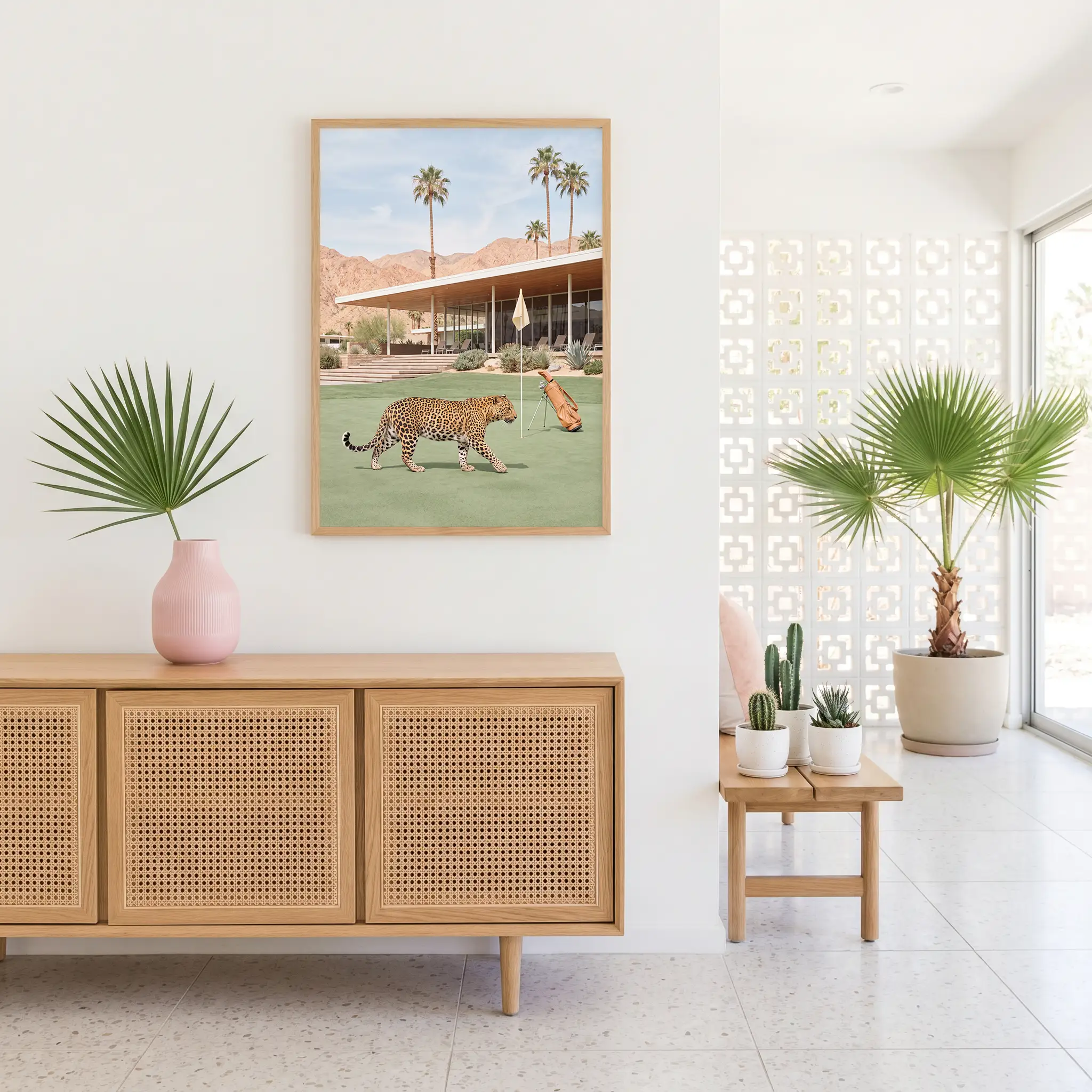
Which layout suits your sideboard?
- Compact cabinet, clear wall: start with one centered print.
- Wider cabinet with a table lamp: balance a vertical picture with the lamp.
- Longer cabinet, more wall to fill: try two coordinated prints.
Measure the cabinet width and usable wall height before shopping. In the diagrams below, every measurement refers to the outside of the frame. They are planning examples, not a list of product sizes available to order.
1. One centered print above a compact sideboard
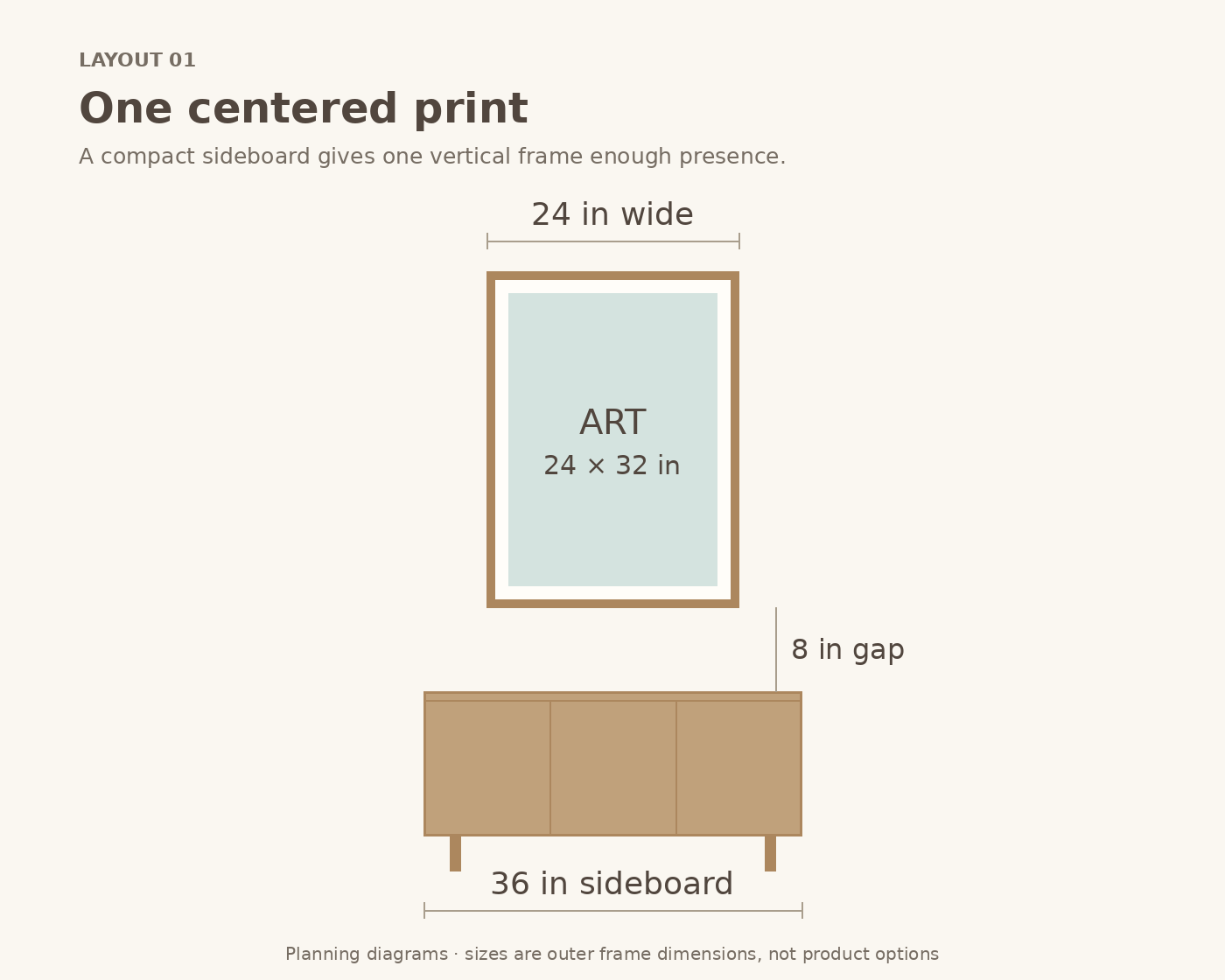
A single vertical picture can give a smaller sideboard enough height and presence. Center it over the cabinet, even if the cabinet is not centered on the entire wall. Keep the objects below it low so the art remains easy to see.
In this example, a 24-inch-wide frame sits above a 36-inch cabinet: the picture is two-thirds of the furniture width. The 8-inch gap keeps the two visually connected.
2. A vertical print balanced by a lamp
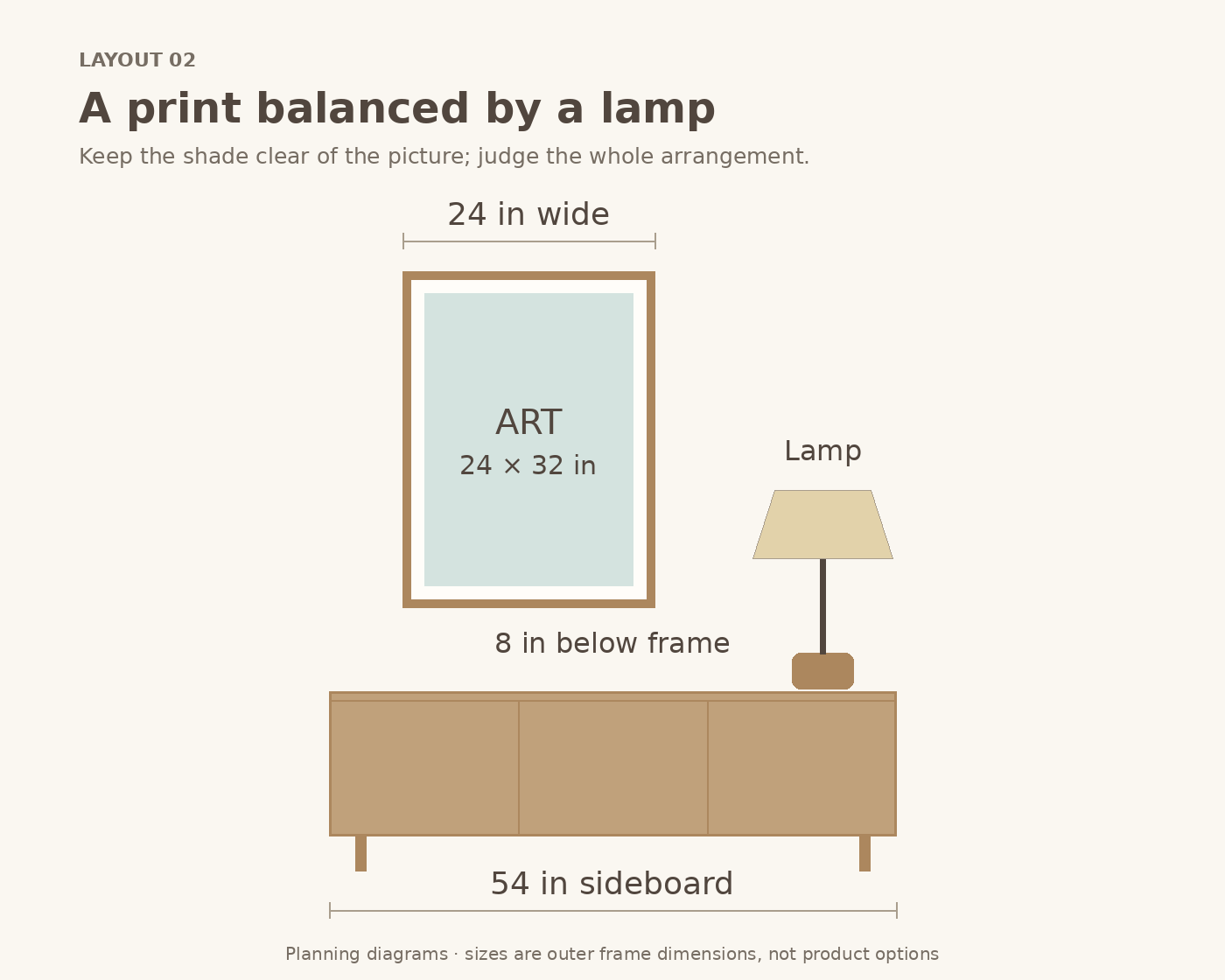
On a wider sideboard, a lamp can help a narrower print feel intentional. Look at the picture and lamp as one arrangement, leaving open space between them. The lamp does not need to match the height of the frame.
The example uses the same 24 × 32-inch outer frame above a 54-inch cabinet. Its position shifts left to make room for the lamp. From your usual seat, check that the shade does not cover the artwork’s main subject.
3. Two prints above a longer sideboard
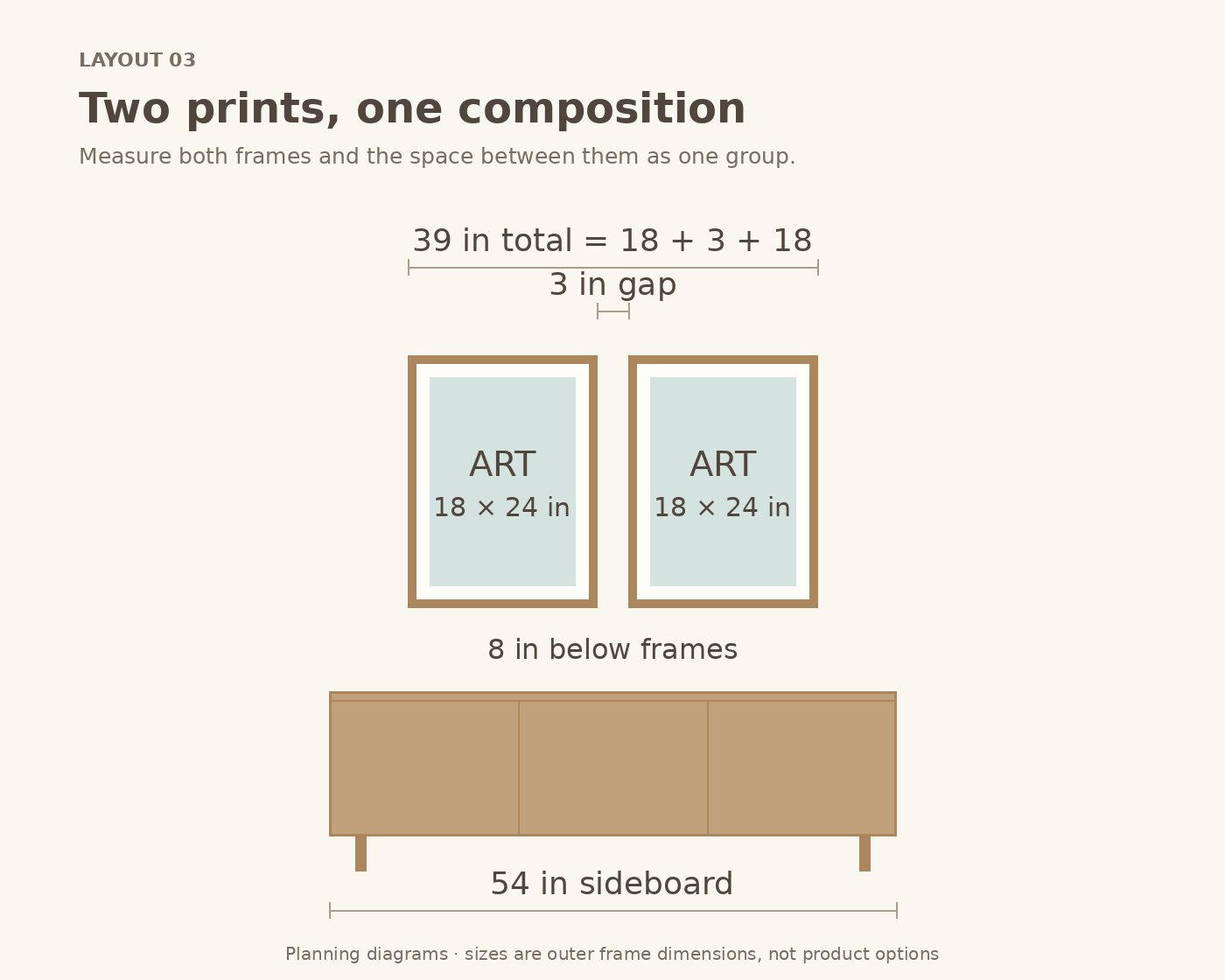
A pair adds width without requiring one horizontal artwork. Choose pictures with a shared palette, similar light or related settings, then use the same frame finish and align the top edges.
Measure the group as a whole: 18 + 3 + 18 = 39 inches. Two 18-inch-wide outer frames with a 3-inch gap occupy about 72% of a 54-inch cabinet’s width. If you start with paper sizes instead, add the actual frame dimensions before calculating the total.
What size print should you start with?
Use these as starting layouts, then check the finished frame size against your own cabinet. Both featured artworks currently offer the print sizes below.
| Sideboard width | Starting layout | Print options |
|---|---|---|
| 36 in | One 24 × 32 in print | $59 unframed / $197 framed |
| 54 in | Two 18 × 24 in prints | $52 unframed / $139 framed, each |
| 72 in | Two 24 × 32 in prints | $59 unframed / $197 framed, each |
Table sizes are print dimensions; framing adds width and height. The diagrams use illustrative outer-frame dimensions, so they are not exact drawings of these product options. Include both frame widths and the gap when measuring a pair. Prices checked October 19, 2026; see the product page for current options.
Choose artwork that works with your wood furniture
For oak, cane or walnut furniture, compare two different color directions:
- Leopard at Palm Springs Golf Club combines sage grass, pale blue sky and sandy mountains. Try it when warm wood needs a cooler counterpoint.
- Two Tigers on a Palm Springs Patio brings orange animal markings, timber and open sky. Consider it when cream walls and plain textiles could use more warmth and character.
These are two art directions to compare, not a prepackaged matching set. For a pair, compare the actual images together before choosing. Browse leopard prints or tiger prints for alternatives.
Shop the Look
Two different color directions for your sideboard. Each print is sold separately, with free U.S. shipping.

Leopard at Palm Springs Golf Club
Sage green, pale sky and sandy mountains.
18 × 24 in: $52 unframed / $139 framed
Other sizes from $39.50 unframed.
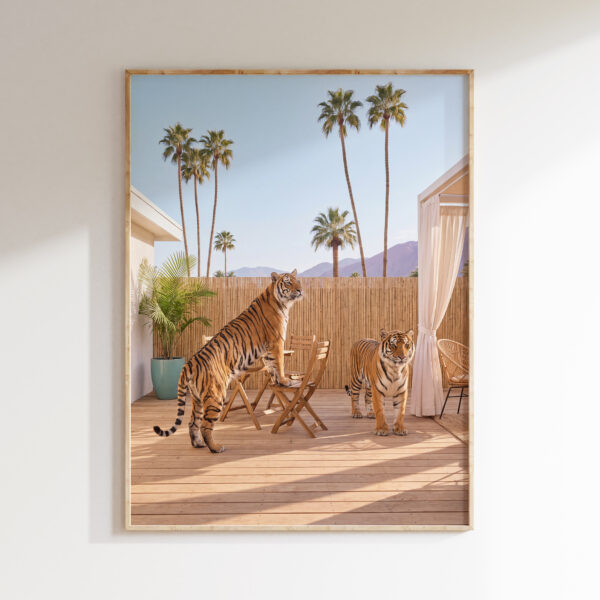
Two Tigers on a Palm Springs Patio
Warm timber, orange tiger markings and open sky.
18 × 24 in: $52 unframed / $139 framed
Other sizes from $39.50 unframed.
Prices checked October 19, 2026. Select your preferred size and finish on the product page.
Check height, scale and finish before ordering
Test a gap of 6–10 inches from the sideboard top to the frame bottom, then adjust for the furniture height and nearby objects. Tape a paper outline of the finished frame to the wall; view it from the doorway and from a seated position.
For a centered picture or group, roughly two-thirds to three-quarters of the cabinet width is a useful starting point. An asymmetric picture-and-lamp arrangement can work differently, as layout 2 shows. You can explore more sizes in our print size guide and placement in our hanging height guide.
A lighter oak frame can contrast with walnut rather than match it exactly. Black can connect to dark lighting or hardware; white gives colorful art a quieter border against a pale wall. Check each print’s available size and frame combinations on its product page, with material details in Printing & Framing.
Styling a furnished vacation home instead of a permanent living room? Our Airbnb wall art guide includes a room-by-room print plan and an easy listing-photo check.
Quick answers
Should art be centered over the sideboard or the wall?
For a centered layout, use the sideboard as your anchor. With a lamp beside the picture, judge the whole grouping rather than centering the picture alone.
Can you hang two vertical prints above a sideboard?
Yes. Include both outer frame widths and the gap in your measurement. Keep the group narrower than the furniture as a starting point, and check it with paper outlines.
Does a frame need to match the sideboard?
No. A finish that relates to another material in the room can look cohesive without being an exact wood match.
Start with the layout that suits your furniture, then choose the artwork you want to live with. View Leopard at Palm Springs Golf Club or explore Two Tigers on a Palm Springs Patio to compare available sizes and framing.