
How to Style Classic Car Wall Art in a Mid-Century Modern Home
Classic car wall art can bring shape, color, and a strong focal point into a mid-century modern room without making the space feel like a garage or a themed display. The key is to treat the car as part of the composition — not as the only idea in the room — and to balance chrome, body color, architecture, and negative space with the materials already around it.
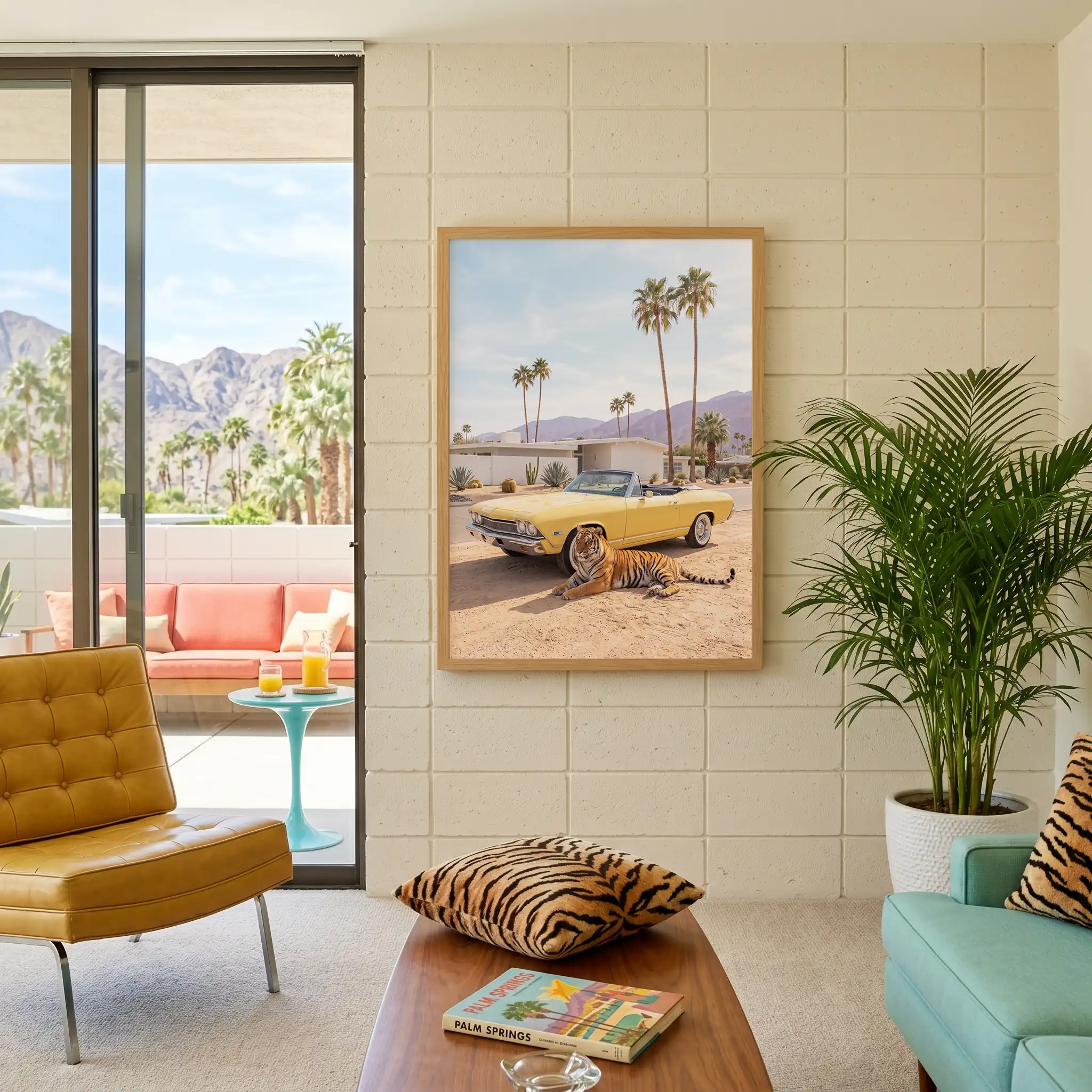
Why classic car art works with mid-century modern interiors
Mid-century modern rooms already rely on strong silhouettes: low sofas, sculptural chairs, tapered legs, horizontal cabinets, and simple architectural lines. A classic convertible or coupe can echo that visual language. The long body of a Cadillac, Mustang, or Chevelle adds a graphic horizontal form, while chrome and saturated paint introduce detail without requiring more furniture or accessories.
The most successful car artwork also leaves enough room around the vehicle. Open sky, desert streets, palms, low architecture, and clean paving help the image feel spacious rather than crowded.
Start with the car color, not the badge
If you are choosing artwork for a room, color usually matters more than the exact model. A pink Cadillac can soften a neutral bedroom or living room. A yellow Chevelle adds warmth to cream, walnut, and terracotta. A blue Mustang works well with pale stone, white walls, and darker wood. Orange can reinforce rust, ochre, and warm leather tones.
Instead of matching the car color everywhere, repeat it once or twice — in a cushion, book spine, ceramic piece, or small lamp. That keeps the room connected without making it look over-styled.
Cadillac, Mustang, or Chevelle?
Different car shapes create different visual moods. Cadillac imagery tends to feel longer, more glamorous, and more architectural. Mustangs add a slightly sportier profile. Chevelles sit comfortably between the two, with enough presence for a statement piece but a cleaner silhouette than many larger luxury cars.
Browse the full Retro Car Wall Art collection to compare different models, colors, wildlife pairings, and Palm Springs settings side by side. For two distinct directions, compare Leopard on Classic Cadillac with Tiger with Yellow 1968 Chevrolet Chevelle Convertible.
Choose one statement piece for the cleanest look
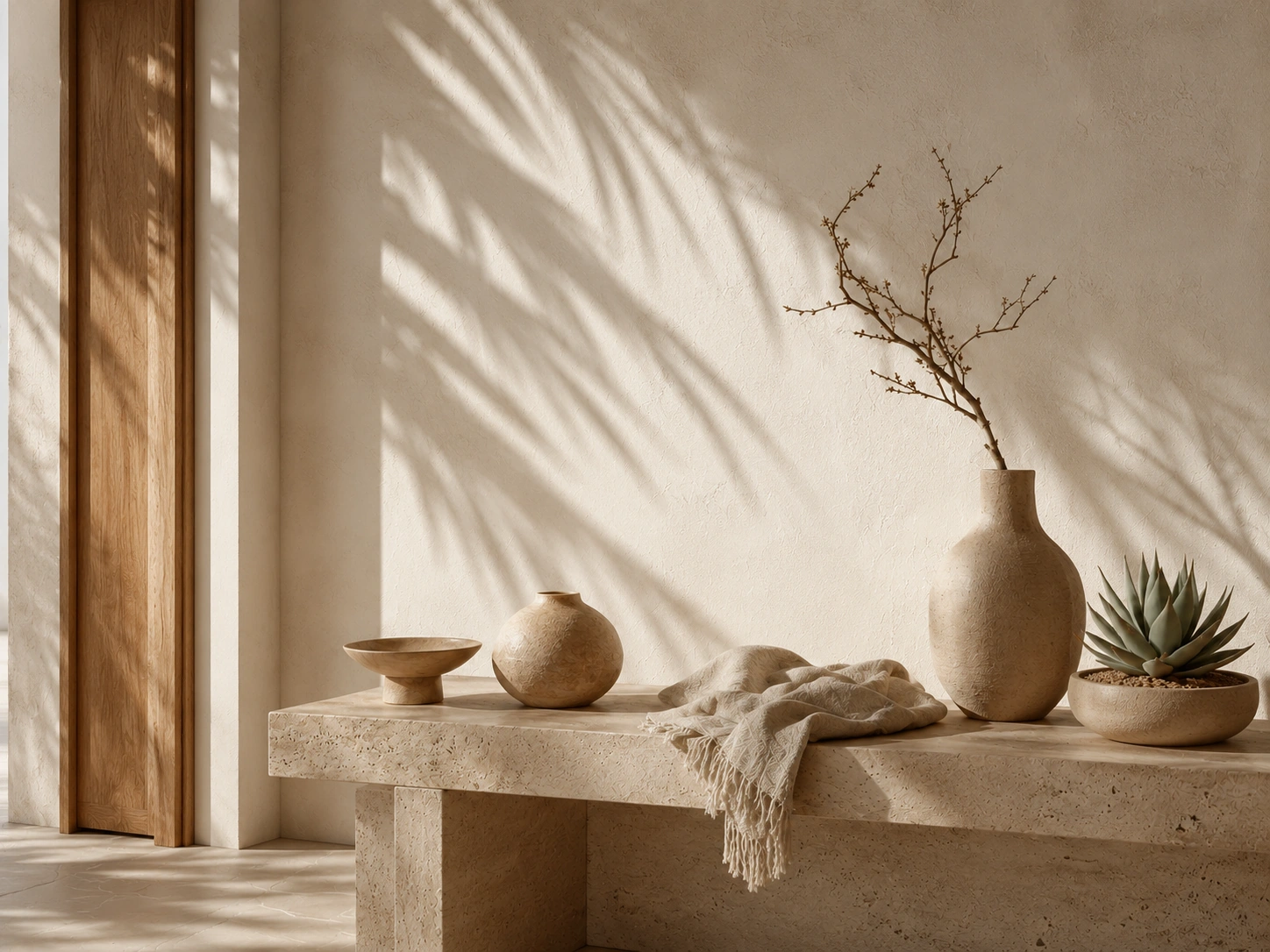
A single larger artwork is usually the easiest way to use classic car imagery in a mid-century room. It gives the car enough visual scale to feel intentional while preserving open wall space. Above a sofa, console, or sideboard, the artwork should feel connected to the furniture below it instead of floating alone.
If you are unsure about scale, use our wall art size guide before choosing the final print size.
When a gallery wall makes sense
A gallery wall can work when the room already has a more collected or editorial feel. Keep the group controlled: two or three car-led pieces, or one car print paired with architecture, poolside, or desert imagery. Repeating one frame color or one dominant palette helps the group read as a composition rather than a collection of unrelated posters.
Best frame choices for classic car wall art
Natural wood frames are a strong fit when the room uses walnut, oak, cane, linen, or warm neutral upholstery. Black frames create a sharper, more graphic look and work well with chrome, dark trim, or black lighting. White frames feel lighter and can keep a saturated car color from becoming too dominant.
For rooms with several vintage-inspired objects, a simpler frame is usually better. Let the car and the image carry the retro character.
Use the setting to connect the art to the room
The car is only one part of the image. A Palm Springs street, a low modern house, desert landscaping, or a line of palms can make the artwork easier to integrate with an interior. If your room already uses desert-modern materials and colors, choose artwork where the architecture and landscape are as important as the vehicle.
For a broader styling framework, read our mid-century modern wall art guide and Palm Springs color palette guide.
Three easy styling directions
Warm and architectural
Use cream, walnut, brass, and one mustard or ochre accent. A yellow or orange classic car becomes the focal point while the rest of the room stays calm.
Soft Palm Springs color
Use warm white, pale pink, light oak, and a small amount of turquoise. Pink Cadillac artwork works especially well here because it adds color without feeling overly bright.
Darker lounge look
Use deeper wood, black accents, cognac leather, and a blue or red car image. This direction suits offices, dens, media rooms, and more masculine living spaces while still keeping the room polished.
Keep the room from becoming themed
The easiest mistake is to repeat the car idea too many times. Avoid adding model cars, route signs, fuel-station decor, and other automotive references simply because the artwork includes a vehicle. One strong print is enough to establish the story. The rest of the room can remain architectural, material-led, and quiet.
Where to browse next
Choosing art for someone else instead of styling your own home? Our classic car wall art gift guide matches retro prints to different car enthusiasts and explains frames, sizes, and pricing.
Start with Retro Car Wall Art for Cadillacs, Mustangs, Chevelles, roadsters, and convertibles, or explore Cars & Animals if you want the full wildlife-and-automotive mix. For the wider visual world of the shop, see Palm Springs Wall Art by Style.
Explore Retro Car Wall Art
Browse framed and unframed Palm Springs-inspired classic car prints featuring Cadillacs, Mustangs, Chevelles, convertibles, desert roads, and unexpected wildlife.