
Wall Art Size Guide: What Size Art for Every Room?
Choosing wall art is not only about the image. Size decides whether the piece feels intentional, lost on the wall, or too heavy for the furniture below it. A beautiful print can still look unfinished when it is too small for the space. The right scale makes the whole room feel more settled.
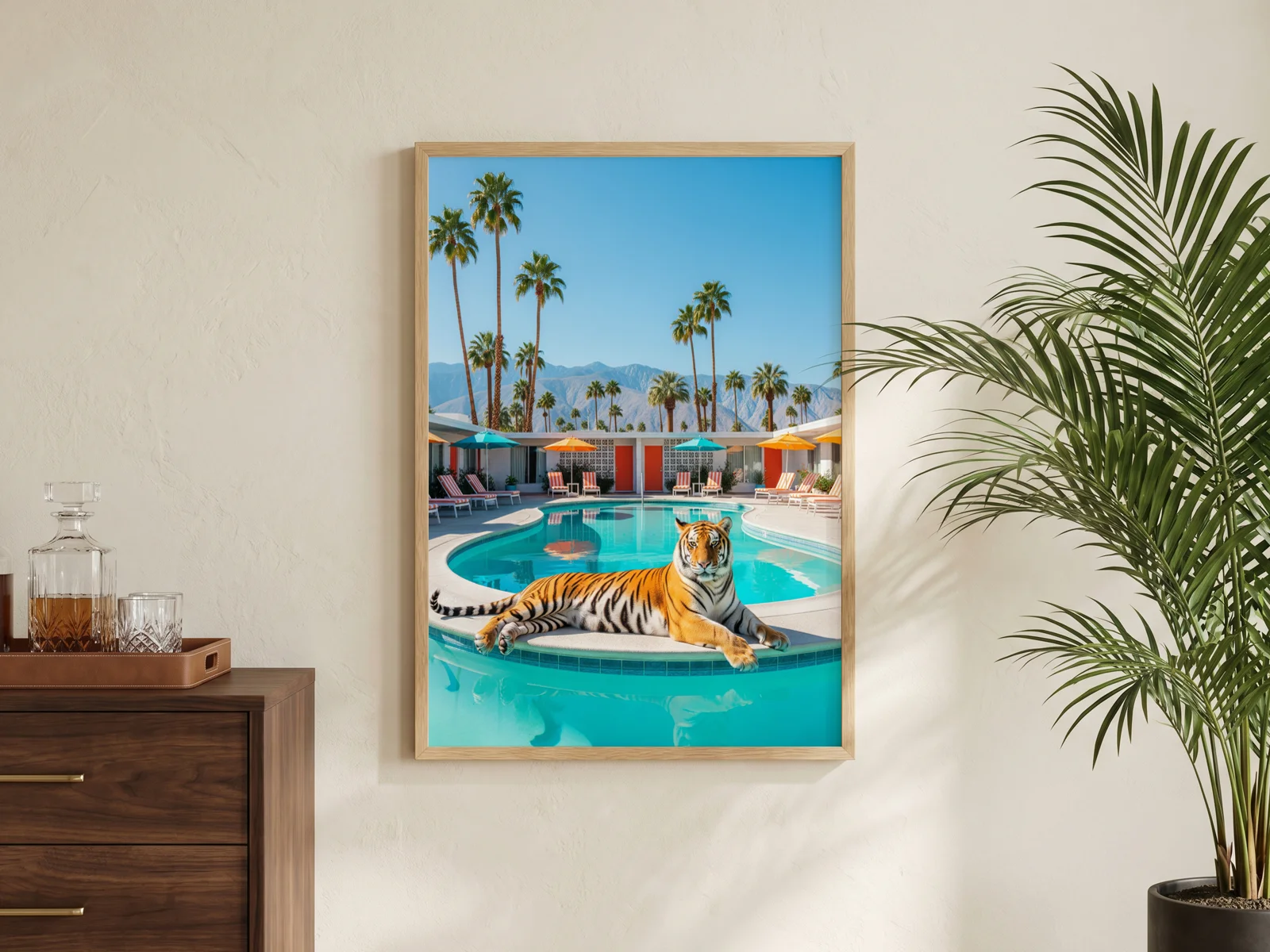
This wall art size guide gives you a practical way to choose art above a sofa, bed, console, dining nook, or gallery wall. It covers the print sizes available in our collection, how much space to leave around the frame, when one large piece works best, and when a pair or gallery wall is the better choice.
Start with the furniture and the room, not an empty wall. Art should relate to the width, height, and visual weight of the space around it. Once you understand that relationship, choosing a size becomes much easier.
Quick wall art size chart by room
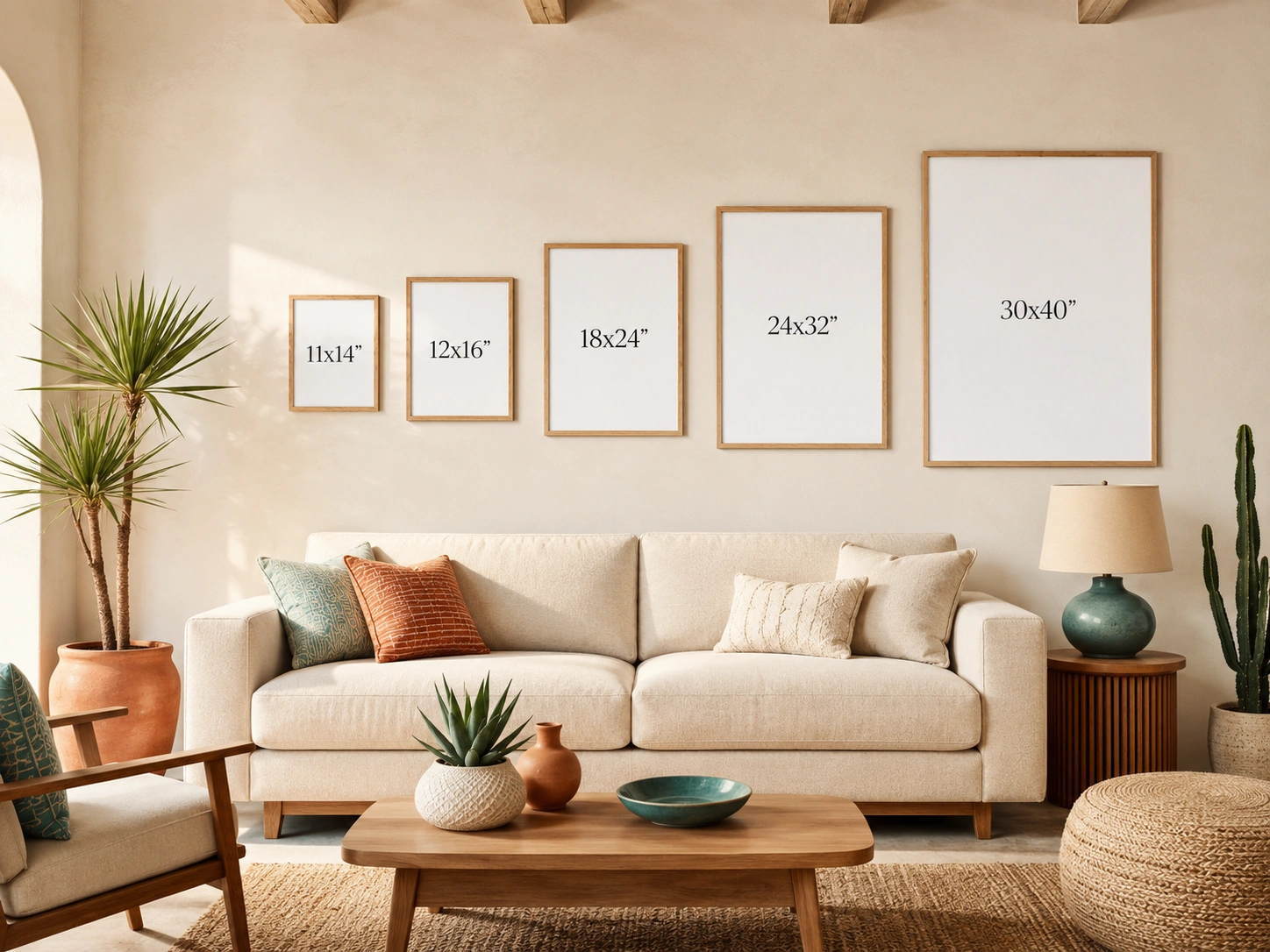
Use this as a starting point, then adjust for the width of the furniture, the ceiling height, and how much visual presence you want the art to have. The dimensions below refer to the image size. A framed print will have a larger finished outer size.
- 11 × 14 inches (28 × 36 cm): best for shelves, small walls, narrow hallways, pairs, and gallery walls. It is usually too small as a single focal piece above a full-size sofa or bed.
- 12 × 16 inches (30 × 41 cm): a compact accent for small rooms, bedside areas, shelves, or a balanced pair.
- 18 × 24 inches (46 × 61 cm): a versatile medium size for a small console, a compact sofa, a bedroom wall, or an entryway.
- 24 × 32 inches (61 × 81 cm): a substantial focal size for many sofas, beds, dining nooks, and sideboards. This is often the most practical large framed option.
- 30 × 40 inches (76 × 102 cm): a large statement size for a broad wall, high ceiling, long sideboard, or sofa wall with enough breathing room. This format is best treated as a strong unframed statement print where framing is not available.
When you are between two sizes, the larger option is often the safer choice for a main wall. Art that is slightly too small tends to make a room feel unfinished more often than art with enough presence.
Start with the furniture below the art
The most useful rule is to relate the art to the furniture below it. A practical starting point is to make the overall artwork or artwork grouping roughly 60–75% of the furniture width. This is not a hard law, but it helps prevent a piece from looking like it is floating alone on a large wall.
For example, a 72-inch sofa often needs an artwork grouping that reads as approximately 43–54 inches wide. That could be one large landscape print, a pair of vertical prints, or a balanced gallery arrangement. A single vertical 18 × 24-inch print may be perfect in a compact room, but it can look too cautious above a full-width sofa.
Use the same logic above a bed, console, or sideboard. The artwork does not need to copy the exact shape of the furniture, but it should feel visually connected to it. Leave enough wall on both sides so the frame has room to breathe.
Once you have the right size, use our guide to how high to hang wall art for balanced placement above furniture.
What size wall art looks best above a sofa?
Above a sofa, the artwork usually becomes the main focal point in the room. This is the place where scale matters most. A piece that is too small can disappear behind cushions, lamps, and surrounding furniture. A well-scaled print helps anchor the seating area and gives the wall a finished purpose.
For a compact sofa or apartment living room
An 18 × 24-inch print can work as a single piece when the sofa is compact, the room is small, or the wall is interrupted by a window, lamp, or architectural detail. A pair of smaller prints can also work when you want a more balanced, layered look.
For a standard living room sofa
A 24 × 32-inch print often gives better visual weight above a standard sofa. It works especially well when the room has clean walls, neutral upholstery, and one main artwork intended to carry the color or personality of the space.
For a wide sofa or an open-plan wall
Use a larger format, a pair, or a grouping rather than one small print in the center. The goal is not to fill every inch of wall space. It is to make the art feel proportionate to the sofa and the room.
Poolside color and graphic compositions often work well at a larger scale because they hold their presence from across the room. For a brighter living-room focal point, explore Poolside Vibes wall art.
What size wall art works above a bed?
Art above a bed should feel balanced rather than heavy. The bed and headboard already create a strong horizontal base, so the artwork needs enough scale to relate to that width without crowding the ceiling or overwhelming the room’s most restful area.
For a smaller bed or a narrow wall, an 18 × 24-inch print can work as one calm focal piece or as part of a pair. Above a queen bed, a 24 × 32-inch print often has the presence needed to make the wall feel finished. For a king bed or wider headboard, a larger horizontal piece, two coordinated prints, or a carefully planned gallery arrangement may work better than one small vertical image.
Choose the mood as carefully as the size. Open desert scenes, softer light, calm architecture, and spacious wildlife compositions tend to feel more restful above a bed. Browse Wild Desert Scenes for a quieter, more grounded direction.
Wall art size above a console or sideboard
Consoles and sideboards are ideal for creating height in an entryway, dining room, hallway, or open corner. Because these pieces of furniture are often narrower and lower than a sofa, vertical art can work especially well here.
An 18 × 24-inch print often suits a smaller console. A 24 × 32-inch print can create more presence above a wider sideboard or in an entryway with higher ceilings. For a larger wall, a 30 × 40-inch unframed print can become the main statement, provided there is enough open space around it.
Keep the surface below the art edited. A lamp, a bowl, a vase, or a plant is usually enough. Too many small objects can compete with the print and make the whole area feel busy.
Wall art for a dining nook, hallway, or small wall
Smaller spaces do not need tiny art by default. A dining nook can often handle a confident 18 × 24-inch or 24 × 32-inch piece because the furniture below it is visually simple. A hallway may need a smaller print, a vertical format, or a pair that creates rhythm along the wall.
Use 11 × 14-inch and 12 × 16-inch prints where the art is meant to be a detail rather than a main focal point: beside a doorway, above a shelf, near a desk, or as part of a gallery wall. For a single statement piece, move up to 18 × 24 inches or larger whenever the wall and furniture can support it.
How high should wall art hang?
Placement changes the result as much as size. Above furniture, keep the artwork close enough that it reads as part of the same composition. A useful starting point is to leave around 6–10 inches (15–25 cm) between the top of a sofa, headboard, console, or sideboard and the bottom of the frame.
When art hangs on an empty wall without furniture below it, the center of the artwork often feels most natural around eye level. In rooms used by several people, there is no perfect universal measurement. The point is to avoid hanging the art so high that it feels disconnected from the rest of the room.
Step back and view the wall from the doorway. The frame should feel connected to the furniture, not stranded above it.
Choose a Size That Feels Intentional
Browse art by mood, then choose the format that gives your wall enough presence without crowding the room.
One large print or a gallery wall?
One large print is usually the simplest choice when you want the room to feel calm, considered, and easy to style. It creates a clear focal point, gives the artwork room to breathe, and works especially well in living rooms, bedrooms, and entryways with minimal furniture.
A gallery wall is useful when the wall is long, when one image would feel too isolated, or when you want to layer several smaller stories together. It works best when the prints share a clear connection: a repeated frame finish, a limited palette, a common subject, or consistent spacing.
Choose one large print when:
- the room needs one strong focal point;
- the wall is above a sofa, bed, or console;
- you want the space to feel more open and less busy;
- the artwork has enough color, story, or scale to stand alone.
Choose a pair or gallery wall when:
- the wall is long or visually empty;
- you are working with smaller print sizes;
- you want more rhythm in a hallway, staircase, or landing;
- the room already has a collected, layered style.
Choose the right format after choosing the size
The same image can feel very different depending on how it is finished. Decide the scale first, then choose the format that suits the room.
- Unframed print: a flexible option for a relaxed room, a personal frame choice, or a larger 30 × 40-inch statement piece.
- Framed print: adds structure and is often the easiest choice above a sofa, bed, console, or sideboard. Natural wood works well with warm neutrals and mid-century materials; darker framing can add more contrast.
- Canvas: gives a softer, more relaxed wall presence and can work well in an airy living room or bedroom.
- Framed canvas: adds more depth and gallery-like weight when you want the artwork to be the main feature of the wall.
Do not choose a frame only because it matches every object in the room. Choose it because it helps the art hold the wall at the scale you need.
Five practical examples by room
For a living room with a large sofa
Tiger at Turquoise Pool has clear water color and a strong central subject, making it useful as a larger focal piece above a sofa or long console. Choose enough scale for the turquoise and architectural details to read from across the room.
For a calm bedroom wall
Desert Giraffe works well when you want a quieter image above a bed or dresser. Its open desert setting gives the room a focal point without adding too much visual pressure.
For an entryway or dining sideboard
Leopard on Classic Cadillac can add character above a console or sideboard. The car lines and open sky make it a good choice for a vertical focal piece in a transitional space.
For a brighter guest room or pool house
Flamingos at Pink Pool Courtyard brings color and an easy resort mood to a room that needs a more playful statement. A medium or larger size helps the pink and turquoise palette feel intentional.
For an office or a story-led wall
White Tiger at Desert Rose Motel works well where the art needs more narrative character. Use it at a size that can hold its own near a desk, bookcase, or long wall.
Common wall art sizing mistakes
Choosing art that is too small for the furniture
A small print above a large sofa or bed often makes the wall feel unfinished. When in doubt, measure the furniture width and compare it with the intended artwork or grouping before you order.
Hanging art too high
Art should feel connected to the furniture below it. Large gaps make even the right size look wrong. Keep the frame close enough to create one visual composition.
Using every available color from the artwork
Let the print introduce one or two accents, then repeat them lightly through cushions, pottery, books, or textiles. The room does not need to copy every color in the image to feel cohesive.
Forgetting the frame’s outer dimensions
Frame size adds visual width and height. A framed 24 × 32-inch print will feel more substantial on the wall than the image dimensions alone suggest. Consider the finished piece, not only the print size.
Final check before you choose
Before ordering, tape out the approximate size on the wall with painter’s tape or hold a sheet of paper at the intended scale. View it from the doorway and from where you usually sit. Ask three questions: does the art relate to the furniture, does it have enough presence, and does the room still have breathing room around it?
The best wall art size is the one that makes the room feel more intentional. Choose a scale that supports the furniture, gives the artwork room to speak, and lets the rest of the space stay calm.
FAQ
What is the best wall art size above a sofa?
A practical starting point is an artwork or grouping that reads as roughly 60–75% of the sofa width. For a compact sofa, an 18 × 24-inch print can work. For a standard sofa, 24 × 32 inches, a larger horizontal print, or a balanced pair often gives more presence.
What size wall art works best above a queen bed?
A 24 × 32-inch print often works well above a queen bed, while 18 × 24 inches can suit a smaller bedroom or a more restrained look. For a wider headboard, use a larger format, a pair, or a grouping rather than one small print.
How much space should I leave between furniture and the frame?
Leave around 6–10 inches (15–25 cm) between the top of the furniture and the bottom of the frame. This usually keeps the art connected to the sofa, bed, console, or sideboard without making it feel crowded.
Can wall art be wider than the furniture below it?
It can, but it often looks less balanced above a sofa, bed, console, or sideboard. As a general rule, keep the overall artwork or grouping narrower than the furniture and leave some breathing room on both sides.
Is one large framed print better than two smaller prints?
One large framed print is usually the cleaner choice when you want a calm focal point. Two smaller prints work well when the wall is long, when you want a more collected look, or when the room needs visual rhythm rather than one dominant image.
What is the difference between print size and framed size?
Print size refers to the image dimensions. A framed print has a larger finished outer size because the frame and border add visual width and height. Consider the finished piece when planning the wall.
Should I choose canvas or framed art for a large wall?
Choose framed art when you want more structure and a defined architectural edge. Choose canvas when you want a softer, more relaxed wall presence. Framed canvas can add extra depth when the artwork needs to feel more gallery-like.
Choose the Style After the Size
Once you know the scale, compare mid-century modern wall art for a structured living room, poolside wall art for brighter resort color, or desert modern art for a quieter palette.